How to Choose Hip and Knee Replacement Implants?
Choosing a hip and knee replacement implant is not a simple matter of selecting the newest model. It is a clinical decision shaped by anatomy, bone quality, age, activity, implant design, and surgical technique. A patient who enjoys hiking may need different priorities from someone managing diabetes, osteoporosis, or limited mobility. The right choice must fit the person, not just the X-ray.
Industry registries provide valuable, but incomplete, evidence. The American Joint Replacement Registry’s 2024 Annual Report shows the growing importance of large-scale outcome tracking for hip and knee procedures in the United States. It emphasizes monitoring revision rates, implant performance, patient factors, and surgical trends. The UK National Joint Registry’s 21st Annual Report also compares implant survivorship across designs and fixation methods. These reports can reveal patterns that individual hospitals may miss. They cannot predict every patient’s result.
Surgeons typically evaluate cemented or cementless fixation, bearing materials, component geometry, and manufacturer-specific evidence. They may also review registry alerts, published clinical studies, and the patient’s medical history. A polished implant brochure is not enough. Ask how long the device has been studied, how it performs in similar patients, and what happens if revision surgery becomes necessary. Small details matter, such as stair use, kneeling, leg length, and returning to work.
There is no universally best implant. That is worth remembering. Even strong registry data may contain gaps, selection bias, or limited long-term follow-up. A trustworthy decision combines surgeon experience, independent evidence, regulatory information, and the patient’s informed preferences. Before surgery, patients should discuss realistic benefits, risks, alternatives, and recovery expectations with a qualified orthopedic specialist.
Understanding Hip and Knee Replacement Implant Types
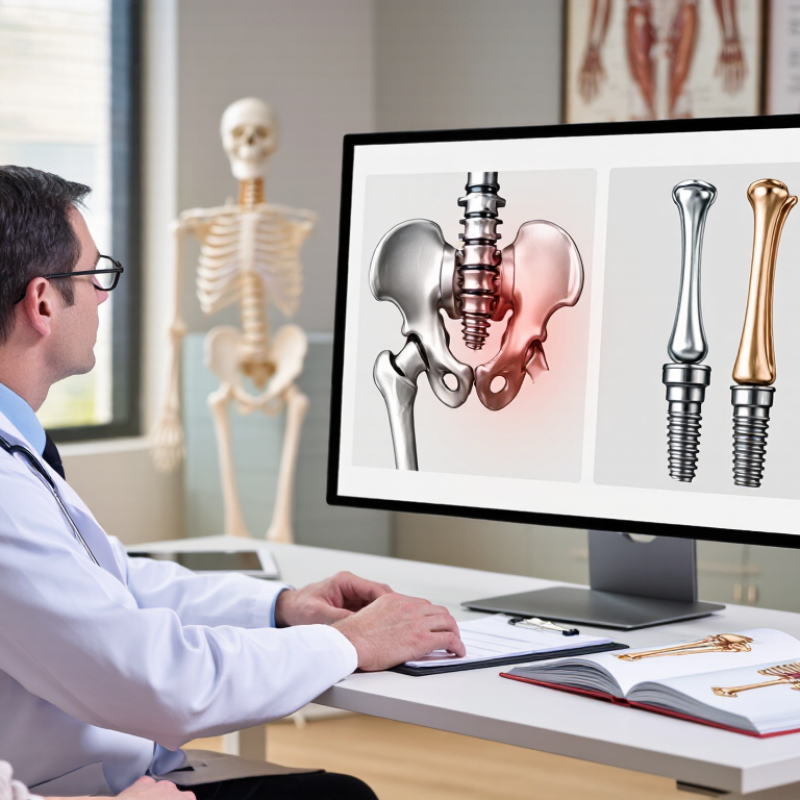
Choosing a replacement implant begins with understanding its design, not with a familiar-sounding material. Hip implants usually include a stem, a ball, and a socket liner. The stem may be cemented or press-fit into the thigh bone. A ceramic or metal ball can move against a plastic, ceramic, or metal liner.
Each combination has trade-offs. Plastic liners may reduce friction, while ceramic surfaces can offer strong wear resistance. However, every material can fail under certain conditions. Bone quality, age, activity level, anatomy, and previous surgery all influence the decision. A physically active patient may need a different design from someone with fragile bone. Imaging helps, but it does not tell the whole story.
Knee implants differ as well. A total knee replacement resurfaces three main areas, while a partial knee replacement preserves healthy compartments. Some knee systems use fixed bearings; others allow more movement between components. Alignment, ligament condition, and daily movement patterns matter greatly. Small details matter.
Patients sometimes focus on implant longevity alone. That is understandable, but incomplete. Surgical technique, rehabilitation, body weight, infection prevention, and follow-up also affect results. In practice, the “best” implant is not universal. A careful discussion with an experienced orthopedic surgeon should compare expected benefits, possible complications, and the surgeon’s familiarity with each design. Even then, no prediction is perfect. Bodily healing remains individual.
Assessing Patient Needs and Surgical Goals
How to Choose Hip and Knee Replacement Implants?
Assessing Patient Needs and Surgical Goals
Choosing an implant begins with the patient, not the operating table. An orthopedic surgeon reviews pain, joint damage, bone quality, movement, age, health, and daily routines. Walking to work differs from gardening, cycling, or climbing stairs. These details influence stability, fixation, and the desired range of motion. Medical history also matters, including allergies, previous surgeries, bone loss, and conditions affecting healing.
Surgical goals should be specific and realistic. One patient may want to walk without a cane. Another may hope to return to gentle exercise. Pain relief is important, but balance, strength, and long-term function matter too. Imaging guides planning, yet scans cannot describe every lived difficulty. A careful discussion can expose overlooked concerns. No implant choice is perfect. Patient expectations may also change after surgery.
Tips: Write down painful activities before your consultation. Bring a complete medication and surgery history. Ask how each option supports your daily goals. Discuss implant materials, fixation methods, expected activity limits, and possible complications. Request clear evidence behind the surgeon’s recommendation. Consider a second professional opinion when uncertainty remains. The best decision is shared, individualized, and revisited when new information appears.
Comparing Implant Materials, Designs, and Fixation Methods
How to Choose Hip and Knee Replacement Implants?
Implant choice begins with your bone quality, anatomy, age, activity, and medical history. Materials affect wear, strength, and movement. Hip implants may combine ceramic or metal heads with highly durable polyethylene liners. Ceramic can reduce wear, but it is not automatically the best option. Knee implants commonly use metal components with polyethylene inserts. Thicker inserts may improve stability, yet they can alter joint movement. Designs also differ. A hip head’s size influences stability and range of motion. Knee systems may preserve or replace the posterior cruciate ligament. More constraint can support an unstable knee, but it may increase stress on fixation.
Tips: Ask your surgeon why one material suits your bone and activity level. Request a clear explanation of expected wear, movement, and revision risk. Bring questions about imaging and long-term follow-up.
Fixation connects the implant to bone. Cemented fixation uses surgical cement and can provide immediate stability. Uncemented fixation depends on bone growth into a textured surface. Hybrid fixation combines both approaches. Each method has advantages and limitations. Bone density, fracture risk, and surgical technique matter greatly. A design that works well for one patient may perform poorly for another. No implant is perfect. Even careful comparisons can miss factors discovered during surgery. Review published evidence with an experienced orthopedic team, and confirm how complications would be managed if symptoms continue.
Evaluating Implant Longevity, Risks, and Recovery Factors
How to Choose Hip and Knee Replacement Implants?
Evaluating implant longevity requires more than reading a survival percentage. Implant materials, fixation methods, joint design, and surgical technique all influence durability. A younger, highly active patient may place greater stress on the joint. A sedentary patient may have different priorities. There is no universally best implant. Surgeons should explain expected lifespan using current clinical evidence, not marketing language. Many implants perform well for 15 to 20 years, but individual results vary.
Risks deserve equal attention. Infection, blood clots, dislocation, fracture, stiffness, and persistent pain can occur after surgery. Some risks increase with smoking, uncontrolled diabetes, obesity, or poor bone quality. Preoperative blood tests, dental assessment when appropriate, and medication reviews can reduce avoidable problems. Still, careful preparation cannot remove every uncertainty. That limitation should be discussed honestly.
Recovery depends on more than the implant itself. Hip and knee patients often need walking aids, physical therapy, and patience during the first weeks. A stable home layout matters: loose rugs and low chairs can make simple movements difficult. Pain usually improves gradually, not overnight. Patients should ask how soon they can drive, work, climb stairs, or return to sport. Rehabilitation plans may need adjustment when swelling, weakness, or fear slows progress. Choosing an implant should be a shared decision based on anatomy, lifestyle, bone health, surgical experience, and realistic recovery goals.
Making the Final Implant Choice with Your Orthopedic Surgeon
Choosing a hip or knee replacement implant should be a shared decision with your orthopedic surgeon. The “best” implant is not identical for every patient. Your age, bone quality, activity level, anatomy, and medical history all matter. Previous surgeries can change the plan.
Ask how the implant will fit your joint and how it will be fixed. Some implants rely on bone growth, while others use surgical fixation materials. Your surgeon should explain expected durability, movement, recovery, and possible complications in plain language. Bring a list of medicines, allergies, and daily activities. Even small details, such as climbing stairs or kneeling at work, may influence the recommendation.
Look at evidence, not advertising. Ask whether the implant has reliable long-term clinical data and whether your hospital follows established safety protocols. Request a clear explanation of alternatives, including why one option may suit you better. A second opinion can be reasonable when the decision feels uncertain. It is not a sign of distrust.
No implant is perfect. That matters. Surgeons must balance stability, comfort, surgical technique, and future revision options. Your priorities may differ from another patient’s goals. Take time to repeat the plan in your own words. If something remains unclear, ask again before signing consent. Pain can narrow attention, so writing questions down may help during the consultation.